Speed up your business processes with artificial intelligence
Handle customer enquiries, internal information and repetitive tasks in an orderly way through AI agents, chatbots and integrated systems.

Which tasks in your business could AI make lighter?
Whether you need AI is answered by the daily work, not by the technology. Below are the five tasks that most often consume a team's time, and how they change with AI.
How it goes today
Customers ask the same questions over and over: price, opening hours, delivery terms, order status. An operator spends much of the day on those answers.
How it changes with AI
AI answers from your own material and, when the question is not standard, hands the conversation to an operator. What reaches the operator is what genuinely needs a person.
How it goes today
Reading incoming enquiries and deciding who should handle them takes time of its own. An urgent request can sit in the queue behind an ordinary question.
How it changes with AI
AI labels each enquiry by topic and urgency and routes it to the right department or specialist. You set the sorting rules; AI applies them to every enquiry.
How it goes today
The information people need is spread across documents, catalogues, policies and old message threads. Staff find the answer by asking several colleagues.
How it changes with AI
AI searches across your documents and shows which document the answer came from. Staff get both the answer and the source, and can check it when it matters.
How it goes today
Data from an application, an order or a form has to be retyped by hand. The work is slow, monotonous and prone to mistakes.
How it changes with AI
AI extracts the required fields from a file or a message and passes them into the system ready to use. Staff no longer type — they review and confirm.
How it goes today
The data exists, but turning it into a conclusion means someone has to build a spreadsheet, filter it and write a report.
How it changes with AI
AI answers the question in plain language and produces a short summary. The figures come from your own database, so they can be checked against the source.
AI does not replace people. It helps the team answer faster, work with information and keep standard processes in order. Decisions, exceptions and difficult conversations with customers still belong to people.
Choose the AI solution that fits your business
We work across the six directions below. Each one answers how it works and who it suits — we do not promise results we have not measured.
AI agent
How it works
The agent understands the question, searches your material for an answer and, where needed, takes an action: checks an order status, opens a ticket or hands the conversation to an operator. When it is not confident it does not invent an answer — it passes the conversation to a person.
Who it suits
Businesses with a high volume of enquiries where most questions repeat: banking, telecoms, large-scale online retail, service centres.
AI chatbot
How it works
Answers a customer's question in a chat window on the website or in Telegram, points to the relevant product or service, and asks for contact details to create a lead. The lead lands in the CRM.
Who it suits
Businesses taking enquiries through a website or Telegram where a delayed first reply costs them.
AI assistant
How it works
An employee asks a question and AI finds the answer in the internal knowledge base, policies and documents, showing which document it relied on. You fill and maintain that base.
Who it suits
Teams with a lot of internal rules: where new staff need to get up to speed quickly, or where everyone must give the same answer.
Document processing
How it works
A file, application, order or form is uploaded, AI extracts the required fields and passes them into the system in a structured form. Fields it is less confident about are flagged for review.
Who it suits
Departments receiving large volumes of the same document type every day: reception, accounting, logistics, application intake.
AI analytics
How it works
You ask a question in plain language, AI assembles the relevant slice of your data and returns a short summary. Underneath the answer it shows which data it drew on.
Who it suits
Businesses that have accumulated data but have no dedicated analyst to read it.
Custom AI integration
How it works
An AI capability is added to the system you already run: a suggested reply inside the CRM, search on the site, triage in a bot, or a module called through an internal API. The workflow does not change — a step is added to it.
Who it suits
Companies whose system already works and who do not want to replace it, only to make certain steps lighter.
The AI solution has to match your business model
The same AI solution will not suit both a sales team and a laboratory. The comparison below shows which direction is closest to your situation.
Sales team
The task that takes the most time
Triaging incoming leads, first contact and routing to the right manager.
The AI solution that fits
An AI chatbot gives the first reply and asks qualifying questions, then writes the lead into the CRM together with its owner.
Customer service
The task that takes the most time
Answering repeat questions and sorting enquiries into categories.
The AI solution that fits
An AI agent answers standard questions from your material and labels the rest by topic before passing them to an operator.
Online retail
The task that takes the most time
Product questions, order status and help choosing the right item.
The AI solution that fits
An AI chatbot connects to the catalogue and order database, checks status and shows products matching what the customer asked for.
Education
The task that takes the most time
Answering learners' questions and helping with course material.
The AI solution that fits
An AI assistant works over the course material and shows which topic the answer came from.
Logistics and operations
The task that takes the most time
Entering order data and answering internal questions about status.
The AI solution that fits
Document-processing AI extracts the data from the file, while an agent answers status questions straight from the system.
Corporate teams
The task that takes the most time
Finding answers across internal documents, policies and rules.
The AI solution that fits
An AI assistant over the internal knowledge base — limited by access level.
This table gives a starting direction, not a final recommendation. In practice one company often runs two solutions side by side: a chatbot facing customers and an assistant for staff internally. Which comes first is decided during the first stage.
AI connects to the systems you already run
An AI that stays in a window of its own is of little use. We connect it to the channels where enquiries arrive and to the systems where your data lives.
AI solution: Sayt, Telegram, CRM, Google Sheets, ERP / ombor, REST API, Bilimlar bazasi, Analitika, E-mail
What this looks like in practice
For example, an enquiry from Telegram can be triaged by AI, created in the CRM as a lead and sent to the right manager. Every step is written to a log, so you can see afterwards what the AI did and which data it relied on.
We do not just plug AI in — we fit it to your workflow
Six stages. Each one ends with a concrete result you review and approve, so nothing unexpected turns up at the end of the project.
- 01
We analyse the process and the repetitive tasks
Together with your team we write down which work repeats through the day and which of it takes the most time.
What you end up withA list of repetitive tasks with an estimate of their volume
- 02
We define what the AI should do
From that list we pick what suits AI and set the boundaries: what it handles itself and what it passes to a person.
What you end up withThe scope of the AI's tasks and an explicit "the AI does not do this" list
- 03
We plan the data sources and integrations
We identify which documents, databases and systems the AI will rely on, and agree access levels and how the material gets refreshed.
What you end up withA map of data sources and an integration plan
- 04
We design the UX and conversation flow
We write down how a conversation starts, what gets asked and when it is handed to a person, then build a working version.
What you end up withA conversation flow diagram and a version you can try
- 05
We check it against test scenarios
A set of real questions is assembled and the AI's answers are assessed against it. Wrong answers are corrected or moved outside its boundaries.
What you end up withA set of test scenarios and the results of running them
- 06
We launch, train the team and set the development plan
We put the solution live, use it together with your team and watch the questions and answers over the first weeks.
What you end up withA working solution, a usage guide and a list of items for the next stage
In most projects the first version starts from one narrow task — for example only the twenty most common questions. That approach shows the team a result quickly and reveals in practice where it is worth expanding.
Not every task needs AI
We added this section on purpose. In the cases below we do not recommend AI — it would not solve the problem, only add a layer on top of it.
The process is not settled yet
If it is not clear who does what, where enquiries come from and how they get closed, AI simply speeds up the disorder. The process has to be defined first.
The data does not exist
AI takes its answers from your material. If the documents, catalogue or database are missing or out of date, the answers will be unreliable too.
Plain automation is enough
If the task fits a clear rule — in this case give this answer, above this amount take this action — plain automation is cheaper and more stable.
The task is rare
For work done a handful of times a month, the cost of building and maintaining an AI solution usually does not pay for itself.
Confidentiality requirements are undefined
When personal or commercially sensitive data is involved, what may leave your systems has to be decided upfront. Until that is settled, we do not start.
In these cases we usually propose the cheaper route: tidy up the process, add plain automation through a Telegram bot, or set up rule-based routing in the CRM. AI comes later, once the foundation is in place.
We design the AI solution together with your business process
None of the following are slogans — each one is a way of working you can check as the project runs.
We start from the business task
The first conversation is not about technology: we start by asking which work takes a lot of time and whether it can be measured. If AI does not fit, we say so.
Attention to UX and the user's flow
The conversation flow, the order of questions and the hand-off point are designed deliberately. The user always knows they are talking to AI.
Connecting to the systems you have
We work with CRMs, websites, Telegram bots and APIs — the AI does not stay in a separate window, it becomes part of your workflow.
Tested, controlled rollout
A set of test scenarios is assembled before launch. Once live, the solution keeps a log of its answers so they can be reviewed.
Room to expand later
The first version is built within narrow limits, but the architecture is ready for a new task, a new channel or a new source of knowledge.
Support and further development
After launch we watch the quality of the answers, keep the knowledge base current and refine the solution based on the questions that come in.
Which technologies do we work with?
The list below is drawn from technologies used in our actual projects — you can see them on the project pages in the portfolio.
The choice of model follows the project's requirements: data confidentiality, response speed, language and budget. We do not declare any provider "the best" in advance — once the requirements list is ready, we justify the choice in writing.
AI and automated systems we have built
These are real projects from our portfolio. For each one we describe only the work delivered — no unmeasured outcomes or percentages.
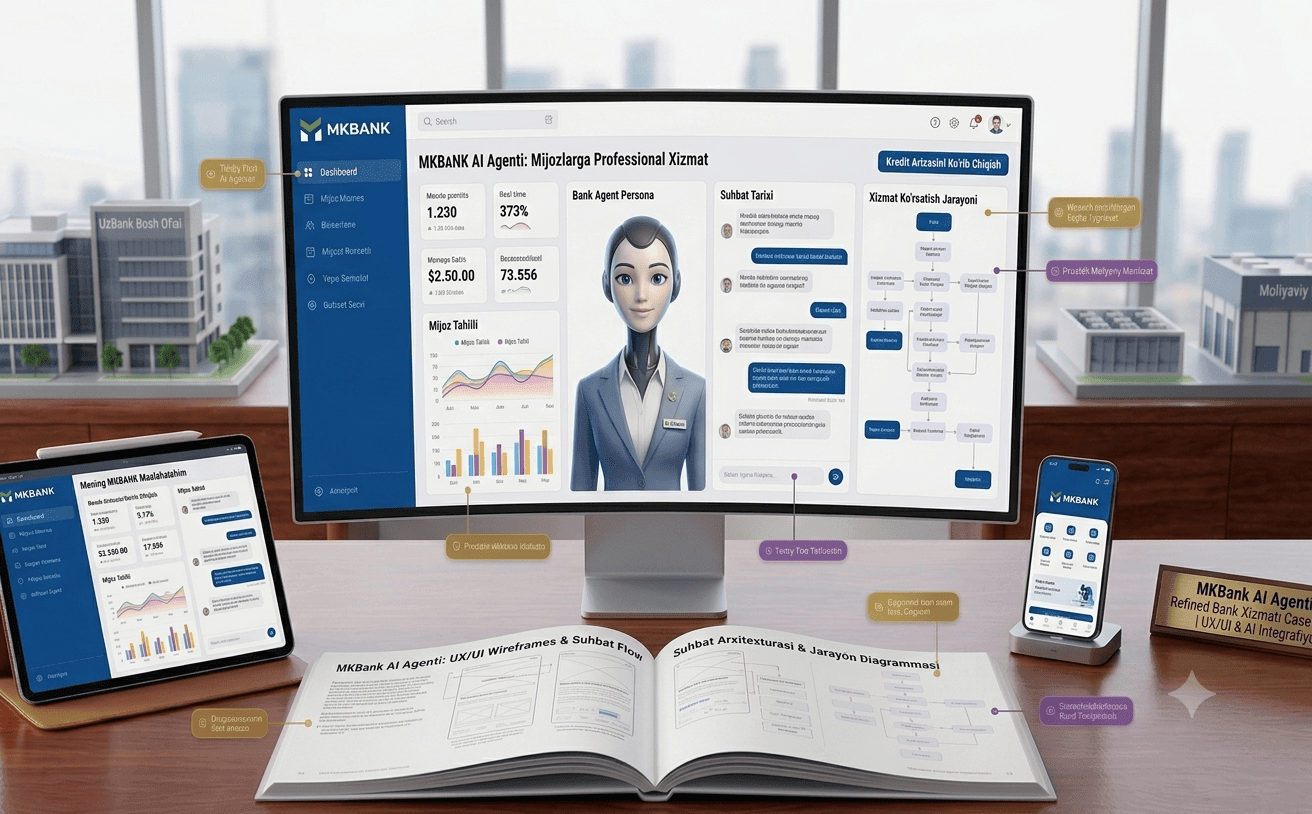
Bank AI Agent
AI Agent
- Client
- A bank (client name withheld for confidentiality)
- Task
- Give accurate, safe answers around the clock on cards, loans, deposits, payments and technical problems.
- What we did
- We built a RAG-based AI agent: intent classification, search, query rewriting, multi-turn context, tool routing, a safety guard and operator fallback. The agent never asks for a PIN, CVV or OTP and returns a safe response where fraud is suspected.
PythonLLMRAGVector SearchIntent ClassificationREST API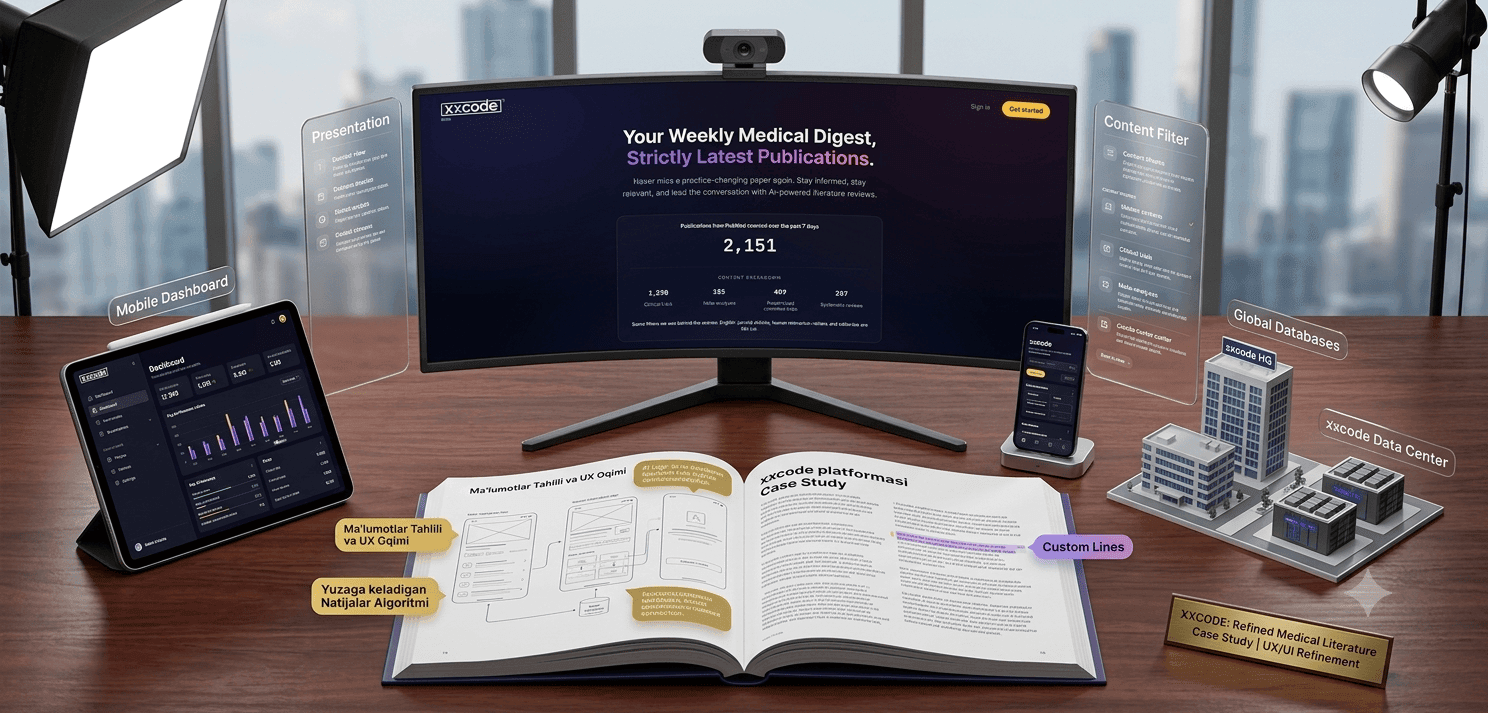
XXCode
AI platform
- Client
- A medical information service for doctors
- Task
- Select, from more than three thousand new medical publications a week, the ones relevant to each individual doctor.
- What we did
- We built a platform that uses AI to filter publications and produce a weekly digest matched to the user's specialty and available time. The digest is delivered as text or audio.
Next.jsReactTailwind CSSPython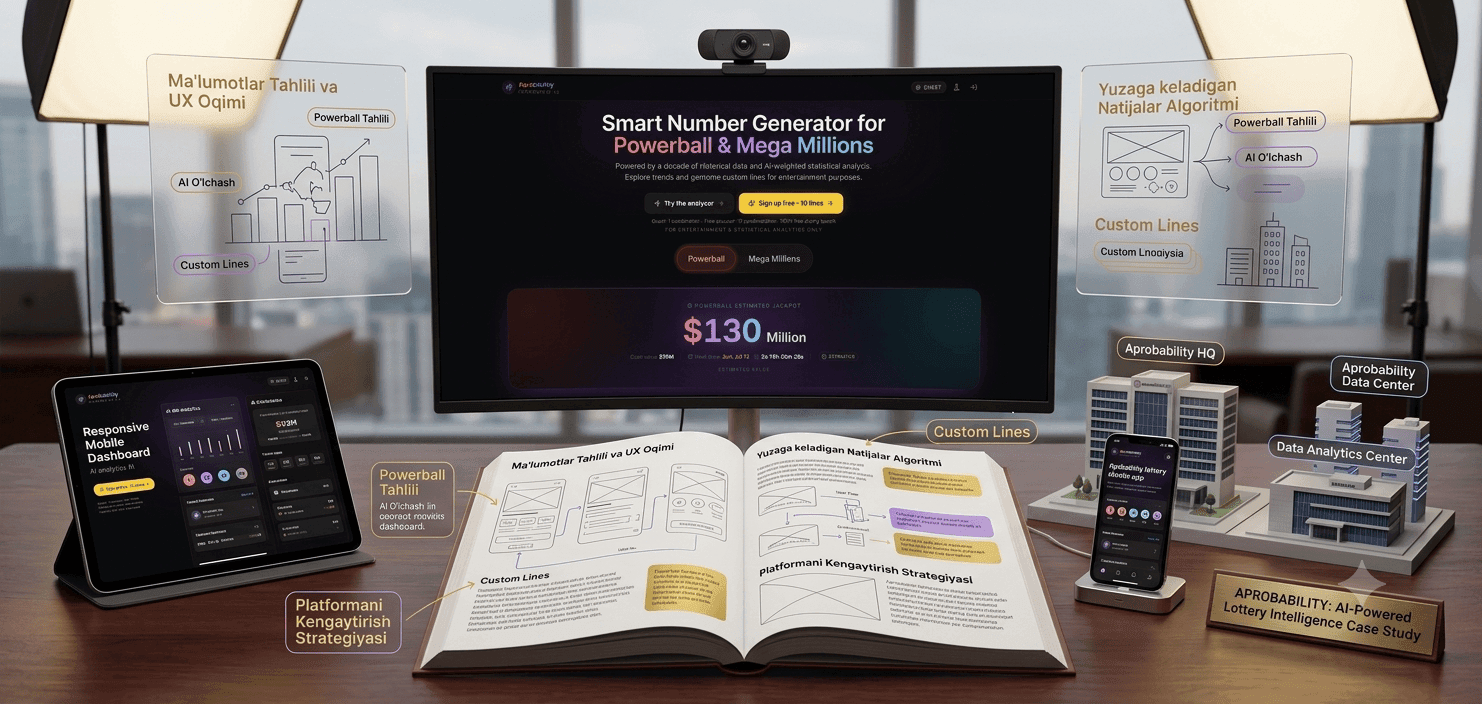
Aprobability
AI platform
- Client
- A statistical analysis platform
- Task
- Present ten years of historical data in a form users can read, and give them a selection tool.
- What we did
- We built an interactive heat map based on frequency calculations, plus a combination generator driven by strategy. The platform carries an explicit notice that it is for information purposes only.
Next.jsReactTailwind CSSPython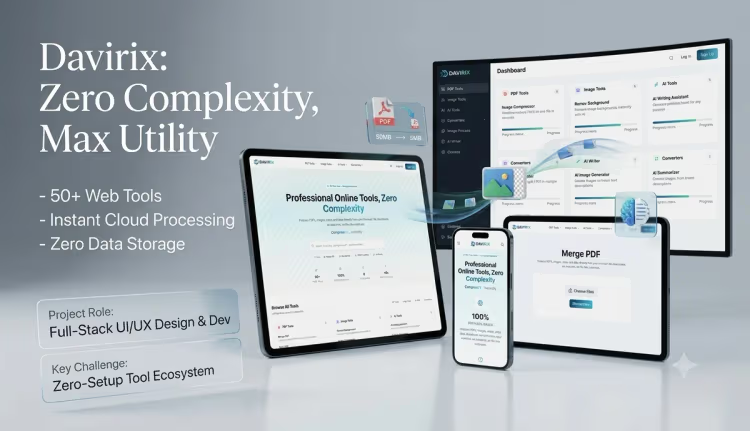
Davirix
Web platform (SaaS)
- Client
- An online tools platform
- Task
- Offer AI tools in one place alongside PDF, image and format conversion utilities.
- What we did
- We added AI Writer, AI Image Generator and AI Summarizer modules to the shared platform. The guiding principle is no sign-up and no files stored on the server.
Next.jsReactTailwind CSSNode.jsAI API
Services that often go alongside AI solutions
AI rarely works alone — it needs a channel and a body of data. The services below cover exactly that side.
Telegram Bot
When you need it
When customers write on Telegram — the bot provides the channel and the AI takes on the answering.
CRM Systems
When you need it
When the leads and enquiries AI creates need to be kept in order, with an owner and a status.
AI Integration
When you need it
When the AI has to connect to an existing system, an ERP or a partner's service.
Corporate Websites
When you need it
When the public information the AI answers from should first be organised on your site.
Online Stores
When you need it
When sales happen online — so the AI can answer questions about the catalogue and order status.
Mobile Apps
When you need it
When the main channel to your users is a phone app.
Read more
Our article explaining the difference between an AI agent and an ordinary chatbot, with examples.

Questions about artificial intelligence services
The questions we are asked most often before a project starts, answered directly.
According to the current tiers on our pricing page: the chatbot and AI analytics directions start at 10,000,000 UZS, while computer vision starts at 15,000,000 UZS. The final figure depends on the scope of tasks, data sources, integrations and the support period, so we issue a quote after reviewing your process.
Let's identify the process where AI can help your business
In a short conversation we go through your team's repetitive tasks, your customer channels and the systems you already run. We then prepare a suitable AI scenario and a project proposal.